Sunday, March 22, 2009

What Type Of Betta Fish Illness Does My Betta have?


Well for one thing my Betta Fish had a Betta Fish Illness that you couldn't get rid of. Unfortunituly he later died. See... It all started last march when the whether was rainy then sunny off and off. Well I usually put my betta fish next to the windw seal before I left work.

This day I remember moving his bowl next to the window thinking how bad the whether was going to be so I didn't have to worry about him getting over cooked.

So I left to work came home around 4:00.

I did the usual feed him moved him into a dark corner and read the daily paper. I didnt notice my bettas illness until I was going to bed and noticed how slow he was moving. 

Now when I start to feed my betta to help his illness he doesnt act like a fish and eat he just lets the betta food drift to the side.

For now I am going to do more research I will keep you posted on the type of Betta Fish Illness .

Sunday, November 30, 2008

Beta Fish Fighting

beta fish
Welcome to my
Beta Fish Fighting Blog
Here you will see and learn what Siamese Fighting Fish also known as Betta Fish are all about. Such as tips and care information on how to raise these types of fish. Raising a fish alone can be a difficult task due to the fact that they are so small and they are not like dogs or cats where they will just wine or cry when they are hurt or feel sick. With these fish you have to be observant of them. They express the way they feel with their actions. If a fish is swimming in a unfamiliar way than you would have a hint that something is wrong with it's fin or the fish itself. See one thing to be familiar with is your fish's actions. When you first take it home for the first week or so you will get to know it, for instance how it swims or hides behinds plants or rocks. It is important that you do this so when your Beta fish is hurt or not feeling well you'll know. I'm here to help provide some useful information and tips for caring and preventing accidents with your Betta fish.

Thursday, May 29, 2008

The Top 5 (FAQ) for Betta Fish

FAQ Betta Fish Fighting 5 FAQ:


1: How can you if it is a male or female Betta Fish?

A: Examine the fins. Male Betta Fish are born with long, flowing fins while the females punier fins closer to their body.


2: I understand that you should not retain two male Betta Fish in the same tank. Is that right?

A: Typically that is true but Betta Fish are frequently addressed as Siamese Fighting Fish and it's because the males are ferociously territorial reserve. Generally they will not really kill one another as many folks seem to believe, but they will naw the crap out of each other's frail flippers and sides which may lead in a strained out or lifeless Betta Fish. occasionally you learn about more than one males being maintained in the same container, but I don't advocate it for the everyday Betta Fish owner.


3: How long will my Betta Fish live?

A: A fit Betta Fish commonly should live between 2-5 years. It's crucial to keep the Betta Fish's habitation clean, the water altered, and the temperature close to optimal. If any of these elements are off it may cut the lifespan of your betta.


4: What type of plants should I arrange in my Betta Fish tank?

A: Betta Fish enjoy plants. Plants give them somewhere to hide and hang around. Almost any aquarium plant is good, whether it's lifelike, silk, or plastic. The only matter to look out for with plastic plants is to be sure that the edges aren't rough and sharp. Razor-sharp plastic plants can split a Betta Fish delicate fins.


5: Can Betta Fish jump out of a tank if the cover isn't on ?

A: Yes. You want to maintain a cover on their tank because they are notorious for leaping out.


-------------------------------------------------------------------------------------------------
To learn more about Betta Fish you should read Betta Care Made Easy !!!
-------------------------------------------------------------------------------------------------

Tuesday, May 27, 2008

How To Pick Out The Longer Lasting Beta Fish...

Betta fish, also famous by the name of Siamese fighting fish are a great first pet for children’s, in addition to people who don't have sufficient time or money for bigger pets. Bettas are reasonably priced, resilient, and easy to care for. Betta fish are a great substitute to goldfish as they require less space. They are contented in a fishbowl or aquarium and have the need of less maintenance as they produce a lesser amount of waste and don't infect the water as much. There are very few materials needed for acquiring a new betta fish: an aquarium or bowl, water conditioner, a net, and a few gravels. The fish will also be more contented with a small number of accessories, such as a plant and a place to hide.

Betta fish are a fun fresh pet as they come in a range of unusual colors and types. While selecting a betta fish, look for one that shows energy and has its fins unharmed. A healthy betta fish will show awareness during feeding times, and they should be fed on a habitual schedule so that they become used to expecting food. Betta fish can be fed on a mixture of foods, from dried arranged foods to frozen brine shrimp. Some betta fish have even got trained to rise out of their water during feeding times. They should only be given to eat once a day, and be alert not to overfeed. Fish will keep on acting hungry until they overeat, which can kill them, and extra food can also pollute the water.

Betta fish are disreputably resilient, and many have lived through ordeals that would kill most fish. This is not a justification to keep the fish in a tremendous environment, as they are displayed in most pet stores. Some of the containers sold specially for betta fishes are better than others. While it may be enjoyable to place two betta fish in a small container divided by a divider as the fish will regularly want to fight, the fish will in fact be happier in its own spacious container. With sufficient space, betta fish will swim around energetically, flaring their gills and showing off their fin display in order to be a focus for mates.

While betta fish are time and again placed in very small containers in a pet store, they will be happier with more room to roam. On the other hand, they might feel frightened by very large aquariums. Betta fish do not take pleasure in company and will not bear other fish trespassing within their territory. While most tropical fish can only have the need of a filter and heater, betta fish can get familiarized to incredibly small environments and do not require any more than a small bowl to live in.

The majority of the betta fish sold at a pet store are the more radiantly colored males. An unhealthy fish will not swim around a lot and will not show awareness in food. The state of its fins may also get worse. Do not purchase a fish that appears to be less healthy, even if all of the fish in the store that day appear lethargic and unwell. Consult a pet store expert if your fish starts showing these symptoms--many fish ailments can be easily cured. Symptoms of a healthy betta fish are the similar signals that a male will give off when he is prepared to mate. A healthy male will make bubble nests and move rocks to make certain that his territory is the ideal place to attract mates. After mating, the seemingly violent male will for a time quietly clean the eggs and place them in his bubble nest, while the female has no part in caring raising young. On the other hand, the young baby fishes must be removed soon after hatching before the male becomes territorial and tries to eat them.

Even though it is a betta's normal propensity to fight, they should never be put together for amusement, and two male betta fishes should never be permissible to live together in an aquarium. Unlike in the wild, there is no space for the losing fish to go and high, and so, generally putting two bettas in a tank will end result in the death of one or both fish. Even mating the fish is a very dangerous endeavor, and hobbyists watch their valued specimens very watchfully during the entire process. Betta fish are some of the most satisfying pets to maintain for very little work.

For more information or to learn more on Betta Fish, please visit myblog


Saturday, May 24, 2008

Beta Fish Video Gallery: Blue Beta (male)


Blue Beta Fish - The most popular videos are a click away

Beta Fish Care: 6 Tips For Increasing The Lifespan Of Your Betta Fish

In this article from my own research I have found the basic tips to keeping your Betta fish alive as long as you can. It is important that each and every Betta fish owner read and recognize these needs. The tips in this article are critical to your Betta's lifespan. And they all do play an important roll in increasing their lifespan.

Believe me, when you first get your Betta, you will be everywhere doing your own research on every aspect on Betta fishes lives. Be sure to follow these tips because they will help.

1. Betta fish should always be kept alone if the tank size is small, otherwise it will get cluttered and your Betta fish will become claustrophobic. No matter what, male Betta fish should always be kept in different fish tanks. Male Betta fish fight for territory and sometimes may result in death if the tank is too small.

2. Make sure that your fish are in a relaxed environment. Don't let the water current be too strong because it can stress out their small fins. Their fins are very sensitive due to their size.

3. Like humans Betta's need some type of entertainment in their life (so they don't get depressed) you should provide them with some silk plants to hide behind. They also would enjoy some beautiful ornaments especially the sparkling ones (they enjoy those a lot). Ornaments help Betta's so that when they are alone they don't get so bored.

4. Betta's come from places like China, Thailand and Vietnam which means that they had a good amount of darkness. So you want to make sure that you allow your fish a good amount of darkness also and too much sunlight can cause your Betta to stress which is definitely not good for their lifespan.

5. A big factor in increasing your fishes lifespan is maintaining the right water temperature (78 degrees is perfect). I advise you to get a filter and thermometer and check frequently. This is very important because Betta's lived in ponds and streams, it would be hard on them to switch temperature so keep it right.

6. Even though this might sound silly and simple believe me when I say this but their have been accidents when the Betta jumps out of the tank. So remember to keep your tank covered. Try and leave some air supply so they don't die because they also use oxygen. You can do this by punching in holes or leaving a crack at the top.

Now this isn't a direct fact but there have been some incidents on the type of water you fill your fish tank up with. Some people reported having their fish die because they filled their tank up with tap water. So after doing some of my own research I discovered that instead of using tap water that it can be more healthier and (better for lifespan) if you use true spring water or any other filtered water and a couple of Aquari-Sol drops.

Betta fish are very good fish and can have a lifespan of up to 2-3 years. There is a lot of info over the internet (Google) and with the right research you can become a Betta expert.


I recently wrote this on Ezine articles. Just thought it was that important.


Friday, May 23, 2008

Beta Fish Photo Gallery: Female Beta

beta fish
Even though this Betta has a solid color it is a female never mind what I said about only male Betta's only being solid. It isn't very often that a female will be a solid color. You can tell that it is a female by her size she big enough to be a male Beta fish.

Beta Fish Photo Gallery: Female Beta


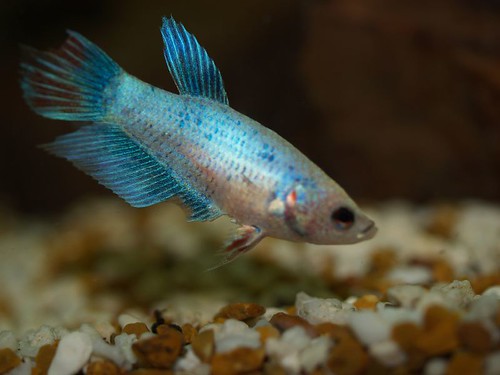
This is by far one of the most unique female Beta fish I have found yet. As you can see her whole body is see through. I have not seen a fish like this before in my life. I am not for sure if it is a genetic reason or if it just happened.

Beta Fish Photo Gallery: Male Beta

beta fish
Once again this is another male Betta fish. I am looking for some that are not solid colors. A lot are so it is a small challenge to find them. No matter what solid colors are still beautiful for Beta's.

Beta Fish Photo Gallery: Male Beta

beta, betta

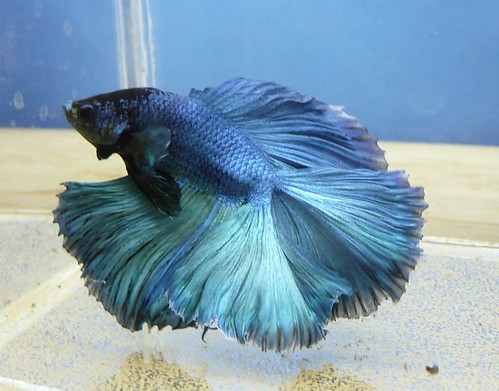
This is a male Beta, it has a fading solid blue color. Most males can be a solid color rather than 2 or 3 different colors.

Thursday, May 22, 2008

Beta Fish: Disclosure Policy

This policy is valid from 23 May 2008


This blog is a personal blog written and edited by me. This blog accepts forms of cash advertising, sponsorship, paid insertions or other forms of compensation.

This blog abides by word of mouth marketing standards. We believe in honesty of relationship, opinion and identity. The compensation received may influence the advertising content, topics or posts made in this blog. That content, advertising space or post will be clearly identified as paid or sponsored content.

The owner(s) of this blog is compensated to provide opinion on products, services, websites and various other topics. Even though the owner(s) of this blog receives compensation for our posts or advertisements, we always give our honest opinions, findings, beliefs, or experiences on those topics or products. The views and opinions expressed on this blog are purely the bloggers' own. Any product claim, statistic, quote or other representation about a product or service should be verified with the manufacturer, provider or party in question.

This blog does not contain any content which might present a conflict of interest.


To get your own policy, go to http://www.disclosurepolicy.org

Wednesday, May 21, 2008

Beta Fish Photo Gallery: Male Beta

Beta Fish
Cherry Red-Blueberry


beta fish fighting, beta fish

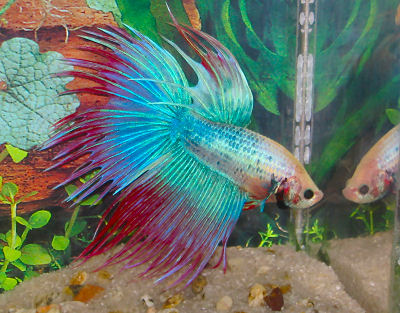
I think this is a male Beta Fish,it has very unique combination of colors. It could be a female but I doubt it do to the fact that it is has 2 different colors and are not dull colors Beta Fish so its hard to tell through a photo if it is a male or female Beta Fish.


If any one thinks I am wrong let me know.

Beta Fish Fights: Black Beta Fish

Betta Fish Fighting


This is another male Beta Fish, he is just swimming but just to show how unique they are. A lot of Beta Fish (male) are solid colors. A lot of times they are bright colors and the females are dull colors.

Tuesday, May 20, 2008

Beta Fish Photo Gallery: Male Beta

beta fish fighting, beta fish, beta fish care

This is a male Beta. You can see how brightly colored he is.
He also has a good size to him.

Beta Fish Photo Gallery: Female Beta

beta fish fighting, beta fish, beta fish care

This is a female Beta Fish. It isn't as bright as the male but still has a beautiful color. They are very tiny compared to a male.

Beta Fish Tips: Baby Beta Fish


These Beta Fish are 4 weeks old. They are clear and have no color. There are a lot of them because Beta Fish lay around 20-30 eggs per litter. It varies, but remember you should feed the baby's twice a day with baby brine shrimp or baby food. Also when the Baby's (Fry's) begin to swim which should be within 3-4 days you need to remove the male from the tank or he will start to eat them. The female should have been taken out when the male drove her out of the nest area.

Beta Fish


Beta Fish Care: Beta Fish Mating (Close Look At The Bubble Nest)


This is a very good example of Beta Fish mating. Its good video quality too. Notice how there is a bubble nest ate the top of the surface. The male does the work of constructing it. Male Beta Fish are dedicated fathers and automatically have the fatherly instinct. These Beta Fish put the time in to delivering the eggs to the bubble nest and making sure that he has all of the Beta Fish eggs. Beta Fish are highly intelligent for their kind. Beta Fish all have their own way of doing things.


Monday, May 19, 2008

Beta Fish Tips: Mating Beta Fish

Beta Fighting Fish


I will return to life as a Siamese fighting fish [wikipedia.org]. That is if the Hindu or Buddhist idea of samsara[wikipedia.org] and karma [wikipedia.org] is correct.

Why?

Stasia told me so when I was managing the fish store. It went something like this: Siamese fighting fish, hereafter referred to by their more common name, Beta fish, beat the living crap out of each other if they are in the same fish tank (at least the male ones do, they also tend to kill females after the whole mating and egg laying thing). So rather than let them beat the crap out of each other we kept them in cups next to the front counter. At any one time there were between 5 and 10 of them on the counter.

On day I was sitting behind the counter talking to Stasia about her, very nice, freshwater plant tank that she had been tending for about a year. All of the sudden one of the Beta fish on the counter went all epileptic and jumped out of his container.

Stasia look down at her feet. I leaned over the counter to look down. There on the floor was this blue (I still remember the color!) Beta fish flopping back and forth.

“Um,” I said, “hold that thought Stasia,” as I walked around the counter and attempted to grab the franticly flopping fish off of the carpet. When I got my hands on it — which took a few tries as it is slimy and was flopping back and forth — it was covered in dog hair. (We didn’t sell dogs or dog supplies, the hair was from Brooklyn and Fafner, our two store mascots, but that’s another story) I walked over to the nearest fish tank, a 60 gallon breeder that was one of the tanks we sold live plants out of. I then dunked my hand and the hairy fish into the tank and shook off all the dirt and grim — and hair.

After I plopped the Beta fish back into it’s tiny cup on the counter I look up at Stasia, who had a completely blank expression on her face, and said “you were saying?”

“You’re going to come back to life as a Beta fish. You’re going to start your life in some rice patty. Then someone is going to bag you up, in a tinny little bag, ship you across the world and put you on display in tinny cups for people to stare at all day. And, you’re going to flop out of that cup and suffocate to death on the filthy floor of some pet store.”

From that day on we kept all the Beta fish in the regular 15 gallon tanks that lined the fresh water section. One per tank with the friendly fish.

Beta Fighting Fish

Beta Fish Tips: What is Betta

Why are Beta Fish considered Fighting Fish? How do you take care of Beta Fish? Find out here, where you can find videos, tips and step by step instructions to Caring for your Beta Fish.

Betta Bleeker, 1850, is a large genus of small, often colourful, freshwater ray-finned fishes in the gourami family (Osphronemidae). The type species is B. picta, the spotted betta.[1] By far the best known Betta species, however, is B. splendens, the Siamese fighting fish.

All the Betta species are small fishes, but they vary considerably in size, ranging from under 2.5 cm (1 in) total length in B. chanoides to 14 cm (5.5 in) in the Akar betta (B. akarensis).[1]

Bettas are anabantoids, which means they can breathe atmospheric air thanks to a unique organ called the labyrinth. This accounts for their ability to thrive in low-oxygen water conditions that would kill most other fish, such as rice paddies, slow-moving streams, drainage ditches, and large puddles. [2]

The various bettas can be divided into two groups, based on their spawning behaviour: some build bubble nests, like B. splendens, while others are mouthbrooders, like B. picta. The mouthbrooding species are sometimes called "pseudo bettas", and are sometimes speculated to have evolved from the nest-builders in an adaptation to their fast-moving stream habitats.[3]

Contents

  • 1 Name
  • 2 Conservation
  • 3 Species
  • 4 References
  • 5 External links

Name

There is frequently much confusion in terminology regarding these fishes. B. splendens is frequently sold in the United States simply as "betta", and fish fanciers are often unaware that, as of 2006, around 65 species are classified in the genus Betta. A further source of confusion is that while the generic name Betta is italicized and capitalized, when used as a common name it is usually not capitalized;[4] the common name of Betta pugnax, for example, is thus Penang betta.

The name Betta (or betta) is pronounced /ˈbɛtə/.[4] (That is, the first part is the same as the English word bet.) By confusion with the name of the Greek letter beta, the name is often (erroneously) pronounced /ˈbeɪtə/ in American English, and is even often misspelled with one t. The name of the genus is completely unrelated to that of the Greek letter, however, being derived from the Thai ikan bettah.[1]

Conservation

While many Betta species are common and B. splendens is ubiquitous in the aquarium trade, other bettas are threatened. The IUCN Red List classifies several Betta species as Vulnerable. In addition, B. livida is Endangered, and B. miniopinna, B. persephone, and B. spilotogena are Critically Endangered.[5]

The United Nations Environment Programme lists an unconfirmed species, Betta cf. tomi, as having become extinct in Singapore between 1970 and 1994.[6] This likely refers to the extirpated Singaporean population of B. tomi, which continues to exist in the wild in Indonesia and Malaysia as well as in captivity; the Red List classifies it as Vulnerable.[7] [8]

Species

The currently described Betta species can be grouped into "complexes" for conservation purposes. (This grouping of species makes no claim at representing a taxonomic reality.) The complexes are the associated species are:[1] [9] [10]

  • Akarensis complex:
    • Betta akarensis Regan, 1910 – Akar betta
    • Betta antoni Tan & Ng, 2006
    • Betta balunga Herre, 1940
    • Betta chini Ng, 1993
    • Betta ibanorum Tan and Ng, 2004
    • Betta pinguis Tan and Kottelat, 1998
  • Albimarginata complex:
    • Betta albimarginata Kottelat and Ng, 1994
    • Betta channoides Kottelat and Ng, 1994
  • Anabantoides complex:
    • Betta anabatoides Bleeker, 1851 – giant betta
  • Bellica complex:
    • Betta bellica Sauvage, 1884 – slim betta
    • Betta simorum Tan and Ng, 1996
  • Coccina complex:
    • Betta brownorum Witte and Schmidt, 1992
    • Betta burdigala Kottelat and Ng, 1994
    • Betta coccina Vierke, 1979
    • Betta livida Ng and Kottelat, 1992
    • Betta miniopinna Tan and Tan, 1994
    • Betta persephone Schaller, 1986
    • Betta rutilans Witte and Kottelat in Kottelat, 1991
    • Betta tussyae Schaller, 1985
    • Betta uberis Tan & Ng, 2006
  • Dimidiata complex:
    • Betta dimidiata Roberts, 1989
    • Betta krataios Tan & Ng, 2006
  • Foerschi complex:
    • Betta foerschi Vierke, 1979
    • Betta mandor Tan & Ng, 2006
    • Betta rubra Perugia, 1893 – Toba betta
    • Betta strohi Schaller and Kottelat, 1989
  • Picta complex:
    • Betta falx Tan and Kottelat, 1998
    • Betta picta (Valenciennes, 1846) – spotted betta
    • Betta simplex Kottelat, 1994
    • Betta taeniata Regan, 1910 – Borneo betta
  • Pugnax complex:
    • Betta breviobesus Tan and Kottelat, 1998
    • Betta enisae Kottelat, 1995
    • Betta fusca Regan, 1910 – dusky betta
    • Betta prima Kottelat, 1994
    • Betta pugnax (Cantor, 1849) – Penang betta
    • Betta pulchra Tan and Tan, 1996
    • Betta schalleri Kottelat and Ng, 1994
  • Splendens complex:
    • Betta imbellis Ladiges, 1975 – crescent betta
    • Betta smaragdina Ladiges, 1972 – blue betta
    • Betta splendens Regan, 1910 – Siamese fighting fish
  • Unimaculata complex:
    • Betta compuncta Tan & Ng, 2006
    • Betta ideii Tan & Ng, 2006
    • Betta macrostoma Regan, 1910 – spotfin betta
    • Betta patoti Weber and de Beaufort, 1922
    • Betta ocellata de Beaufort, 1933
    • Betta unimaculata (Popta, 1905) – Howong betta
  • Waseri complex:
    • Betta chloropharynx Kottelat and Ng, 1994
    • Betta hipposideros Ng and Kottelat, 1994
    • Betta pi Tan, 1998
    • Betta renata Tan, 1998
    • Betta spilotogena Ng and Kottelat, 1994
    • Betta tomi Ng and Kottelat, 1994
    • Betta waseri Krummenacher, 1986
  • unassigned:
    • Betta apollon Schindler & Schmidt, 2006
    • Betta aurigans Tan & Ng, 2004
    • Betta cracens Tan & Ng, 2005
    • Betta edithae Vierke, 1984
    • Betta ferox Schindler & Schmidt, 2006
    • Betta gladiator Tan & Ng, 2005
    • Betta ideii Tan & Ng, 2006
    • Betta lehi Tan & Ng, 2005
    • Betta obscura Tan & Ng, 2005
    • Betta pallida Schindler & Schmidt, 2004
    • Betta pallifina Tan & Ng, 2005
    • Betta raja Tan & Ng, 2005
    • Betta stigmosa Tan & Ng, 2005
    • Betta stiktos Tan & Ng, 2005

References

  1. ^ a b c d "Betta". FishBase. Ed. Ranier Froese and Daniel Pauly. March 2006 version. N.p.: FishBase, 2006.
  2. ^ Marcus Song, Caring for Betta Fish (Lulu Press, 2006). ISBN 1-4116-9365-5
  3. ^ Fernando, Yohan. Male Bettas are most of the time compatible with an Irradescent shark a pleco and lots of other community fish that do not have presenting fins and sre not territorial. Betta edithae - a Pseudo Betta?. International Betta Congress Species Maintenance Program. Retrieved on 2006-06-30.
  4. ^ a b "Betta". American Heritage Dictionary (4th ed.). Retrieved on 2006-06-29.
  5. ^ 2006 IUCN Red List of Threatened Species. Retrieved on 2006-06-30.
  6. ^ Extinctions since 1970. United Nations Environment Programme World Conservation Monitoring Centre (2006). Retrieved on 2006-07-01.
  7. ^ Kottelat, M. (1996). Betta tomi. 2006 IUCN Red List of Threatened Species. Retrieved on 2006-07-01.
  8. ^ Betta tomi. International Betta Congress Species Maintenance Program. Retrieved on 2006-07-01.
  9. ^ Species Complex Management. International Betta Congress Species Maintenance Program. Retrieved on 2006-07-01.
  10. ^ Betta (TSN 172610). Integrated Taxonomic Information System. Accessed on 30 June 2006.

Beta Fish Tips: How To Spawn Beta Fish

Beta Fish Tips

How To Spawn Beta Fighting Fish


Getting Beta's to spawn can be tricky, and you have to be very careful or you could end up with a dead Beta. What you need is a 10 gallon fish tank, and a cheap air driven sponge filter. You don't want any substrate because if you do have it you will lose lots of eggs. Provide plenty of caves for the female to hide from the male. To start the breeding put the male Beta in the tank and put the female in a plastic breeder designed for live-bearers. This way they can get used to each other and get ready for mating. The female must be a little bit smaller than the male so he can wrap around her to squeeze out the eggs. But she can't be too small or he will kill her. So leave the female in the breeder and let the male build his bubble nest. It usually takes a week or so for them to get ready. When the male has a nice big bubble nest, and the female is fat and full of eggs and showing the operculum, let her go and let them do their magic. When they are done remove the female and put her in a tank by herself with very little current so she can recover. The male will tend to the eggs, remove him 2-3 days after the eggs hatch. Feed the fry baby brine shrimp or boil an eggs and make a paste by smashing the yolk and mixing it with water. And get lots of cups ready for the males, as they will begin to fight as they get older. Good luck!


Beta Fish Tips
The Betta Fish Blog